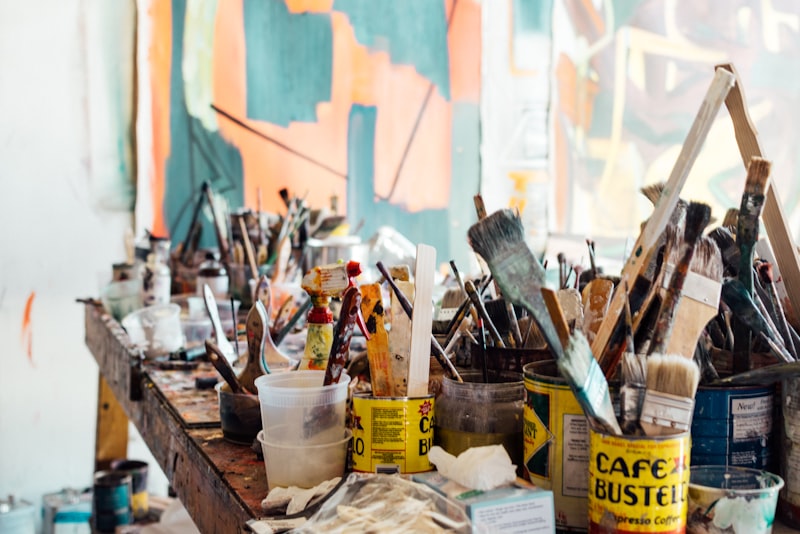
There's a myth that you need a dedicated craft room, painted in cheerful colours and lined with matching jars, before you can take a hobby seriously. It's a lovely fantasy, and it stops a lot of people from ever starting. The reality is that most crafters, even experienced ones, work in a corner of a room they use for other things. What matters isn't the size of the space. It's how easy that space makes it to begin.
A good crafting space does two quiet jobs. It lowers the effort of starting, so you can sit down and make something in the gap between dinner and bed. And it contains the mess, so the rest of your home stays livable. Get those two things right and you can craft happily in a flat, a shared house, or a kitchen you clear three times a day.
Choose the space that fits your life#
Before you buy a single storage box, look honestly at where crafting will actually happen. Your ideal spot depends less on square footage and more on your routine, your household, and how messy your chosen craft is.
If you have a whole room or a quiet corner nobody else uses, wonderful — you can leave a project out and return to it. But if you're sharing space, working at a dining table, or squeezing a hobby into a small home, you'll want a setup you can deploy and pack away in a couple of minutes. That "clear away" speed is the single biggest factor in whether a craft space gets used. A gorgeous studio that's a hassle to reach loses every time to a humble box you can grab from a shelf.
The best crafting space isn't the biggest or the prettiest. It's the one that lets you start in under two minutes and clear up in five.
Think, too, about the craft itself. A tidy, portable craft like knitting or embroidery needs almost nothing — a comfy chair and a basket. A messier craft like painting or clay wants a surface you don't mind splashing, near a sink if possible. Match the space to the mess and you'll dread the cleanup far less.
Three setups for small homes#
You don't need to invent this from scratch. Most small-space crafters use one of three simple approaches, and any of them can be put together cheaply. Pick the one that matches how much room you can spare.
- The single box. Everything for one craft lives in a lidded box under the bed or on a shelf. You pull it out, work on a table, and pack it back. Perfect for portable crafts and tight spaces.
- The rolling cart. A small trolley on wheels holds your supplies and rolls to wherever you're working, then tucks into a corner. Great when you want your things visible and mobile.
- The dedicated corner. A small desk or table left permanently set up in a spare corner. Ideal if you have the room and want to leave a project mid-flow.
Whichever you choose, keep the footprint modest at first. It's much easier to expand a small setup that works than to shrink an ambitious one that swallowed a room. And you certainly don't need to fill it with supplies on day one — my guide to what you actually need to start crafting will keep that first shopping list short and cheap.
Light and surface come first#
If you spend money anywhere, spend it on light and a decent working surface. These two things affect your comfort and your results more than any pretty storage ever will, and beginners consistently underrate them.
Good light saves your eyes and your patience. Daylight from a window is best, so set up near one if you can. For evening crafting, a simple adjustable desk lamp pointed at your hands makes fine, fiddly work far less frustrating. Straining to see stitches or brush edges in dim light is a quiet reason many people find crafting tiring and drift away from it.
Your surface needs to be stable, roughly the right height, and protectable. A wobbly table ruins delicate work, and a surface you're afraid to mark will make you tense. Lay down a cutting mat, an old tablecloth, or even a sheet of thick card to create a zone you can be relaxed and messy within. Being able to spill, splash, and glue without worrying about the table underneath changes how freely you work.
Store it so you'll actually use it#
The final piece is storage, and here the golden rule is simple: what you can see, you'll use; what you hide, you'll forget. Beginners often over-invest in beautiful opaque boxes that make their supplies disappear, then wonder why they never craft anymore.
Aim for visible, grab-and-go storage. Open shelves, clear containers, a pegboard, or jars on a windowsill all keep your materials in sight and within reach. The goal is that starting takes seconds — you glance over, see your yarn or your paints, and you're tempted to sit down. If getting started means digging through three drawers, you'll do it far less often.
Keep it loosely organised rather than perfectly organised. Group things by craft or by type, label a few boxes, and stop there. Elaborate labelling systems look wonderful online but tend to collapse in real life, and a tidy-but-unused space helps nobody. A little visible mess that gets used beats a flawless system that doesn't.
Finally, leave a small "in progress" spot — a shelf, a tray, a corner of the cart — where a half-done project can wait for you. Having somewhere safe to park an unfinished piece makes it far more likely you'll come back and actually finish your first project instead of losing it to a cleared table.
Make the space earn its keep#
A crafting space isn't a decorating project or a purchase. It's a tool, and the only measure of a good one is whether it gets you making. So resist the urge to build the perfect studio before you begin. Start with a box or a corner, put good light and a clear surface first, keep your supplies visible, and give yourself a spot to park works in progress.
Set it up this weekend with what you already own, and adjust as you learn what annoys you. Maybe you'll want the cart nearer the sofa, or the lamp a little brighter, or one more shelf. That's the space growing with your hobby, exactly as it should. The best craft room in the world is the modest one you actually sit down at, again and again.